Now Reading: Himachal Political Row: BJP Slams Congress Over EVM Claims
-
01
Himachal Political Row: BJP Slams Congress Over EVM Claims
Himachal Political Row: BJP Slams Congress Over EVM Claims

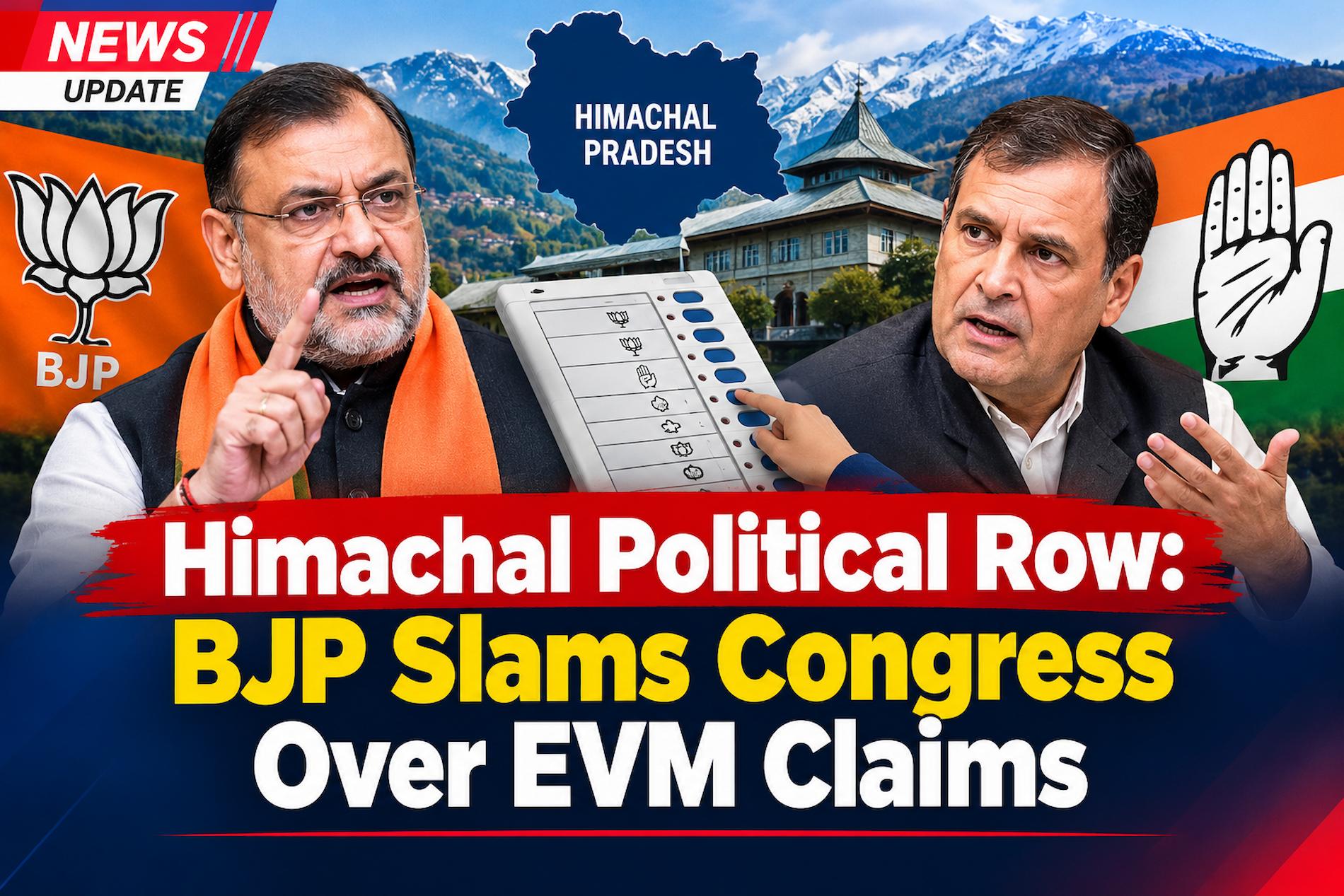
BJP Slams Congress Over Himachal EVM Row
A fresh political confrontation has erupted in Himachal Pradesh after BJP leader Shrikant Sharma criticized Congress over its allegations concerning electronic voting machines and electoral roll revision. The dispute follows May 2026 municipal corporation results, September protests against the Election Commission, and demands for accountability. Here is what both parties have said, the election figures behind the argument, and why the controversy matters.
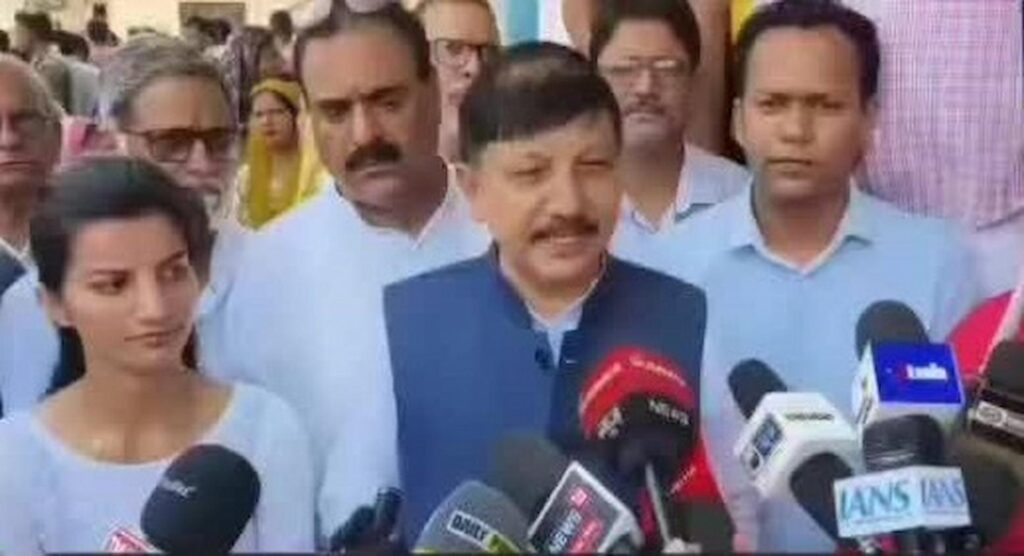
The latest Himachal Political update has brought electronic voting machines (EVMs), electoral-roll verification, and political accountability back into the spotlight. On October 7, 2026, Shrikant Sharma, the Bharatiya Janata Party’s (BJP) Himachal Pradesh in-charge, criticized the Indian National Congress over its allegations concerning the election process and the Special Intensive Revision (SIR) of electoral rolls.
The statement, reported on October 8, places the state’s political dispute within a wider national argument over the Election Commission of India (ECI), voting procedures, and claims of alleged vote theft. The Bharatiya Janata Party (BJP) has accused Congress of taking inconsistent positions on election administration, while Congress has questioned the electoral-roll revision process and demanded action against Chief Election Commissioner Gyanesh Kumar.
The central question is whether political parties apply the same standards to election results regardless of who wins. Understanding the controversy requires examining the statements made by both sides, the May municipal corporation results, and the distinction between political allegations and independent facts.
Key Takeaways
- October 7, 2026: Shrikant Sharma, BJP’s Himachal Pradesh in-charge, criticized Congress over its EVM-related allegations and objections to SIR.
- May 17, 2026: Polling took place across four municipal corporations: Mandi, Dharamshala, Solan, and Palampur.
- May 31, 2026: The reported results across 63 wards gave BJP 37 seats, Congress 23, and independents three.
- September 25, 2026: Himachal Congress leaders protested against the ECI and demanded action concerning Chief Election Commissioner Gyanesh Kumar.
- October 8, 2026: It is reported that the BJP’s response to Congress’s allegations added a fresh chapter to the state’s political dispute.
- Main point of disagreement: BJP has challenged Congress’s criticism of EVMs and electoral-roll revision, while Congress has raised concerns about electoral transparency and possible voter exclusion.
Shrikant Sharma Challenges Congress on EVM Allegations
The Himachal political news debate intensified after Shrikant Sharma questioned Congress’s criticism of the election process. According to the reported BJP position, Congress and its allies should maintain a consistent stance toward the Election Commission instead of questioning its credibility in response to unfavourable results.
Sharma accused Congress of spreading what he described as misinformation about SIR. He also questioned the opposition’s demand for the resignation of Chief Election Commissioner Gyanesh Kumar.
The BJP’s argument centers on consistency. Sharma challenged Congress to explain whether electoral defeats should be attributed to EVMs, ballot papers, the Election Commission, or the policies and leadership of the party itself.
These comments are political assertions made by a BJP leader. They should not be interpreted as independent proof that Congress’s concerns are unfounded or that every aspect of the electoral process is beyond question.
Why the May 2026 Municipal Results Matter
The BJP’s argument draws heavily on the results of the four municipal corporation elections held in May. According to the figures provided in contemporary reporting, BJP won three corporations, while Congress secured Palampur.
The combined ward tally gave BJP a clear lead across the four corporations. Sharma’s position is that the results challenge the suggestion that the use of EVMs necessarily disadvantages Congress.
However, municipal election results alone cannot establish whether every electoral procedure was conducted correctly. Assessing specific allegations requires relevant records, documented complaints, and responses from the appropriate election authorities.
Himachal Municipal Elections 2026: The Numbers
The May elections provide essential context for understanding the dispute between BJP and Congress. Polling was held on May 17, with results announced on May 31, 2026.
| Municipal corporation | Total wards | BJP | Congress | Independents |
|---|---|---|---|---|
| Mandi | 14 | 12 | 1 | 1 |
| Dharamshala | 17 | 11 | 5 | 1 |
| Solan | 17 | 10 | 6 | 1 |
| Palampur | 15 | 4 | 11 | 0 |
| Total | 63 | 37 | 23 | 3 |
The figures show that BJP won 37 of the 63 wards, compared with 23 for Congress and three for independent candidates. BJP performed particularly well in Mandi, where it won 12 of 14 wards, and Dharamshala, where it secured 11 of 17.
In Solan, BJP won 10 of 17 wards. Palampur produced the opposite outcome: Congress won 11 of 15 wards, leaving BJP with four.
The results demonstrate that support differed by city. They also provide a factual basis for discussing the parties’ competing interpretations of the elections without assuming that a particular result proves or disproves a separate allegation about voting procedures.
Voter Turnout Across Four Cities
Reported turnout figures offer additional context for the May 17 elections. One Times of India report cited 83,342 voters out of 131,369 eligible voters, representing an overall turnout of approximately 63.4%.
The reported corporation-wise turnout was:
- Palampur: 68.9%
- Mandi: 68.7%
- Dharamshala: 60%
- Solan: 58.3%
Palampur recorded the highest turnout among the four corporations, while Solan recorded the lowest. These figures help explain the scale of voter participation, although turnout alone cannot determine the accuracy of a result or resolve allegations about electoral procedures.
Congress Protests Against the Election Commission
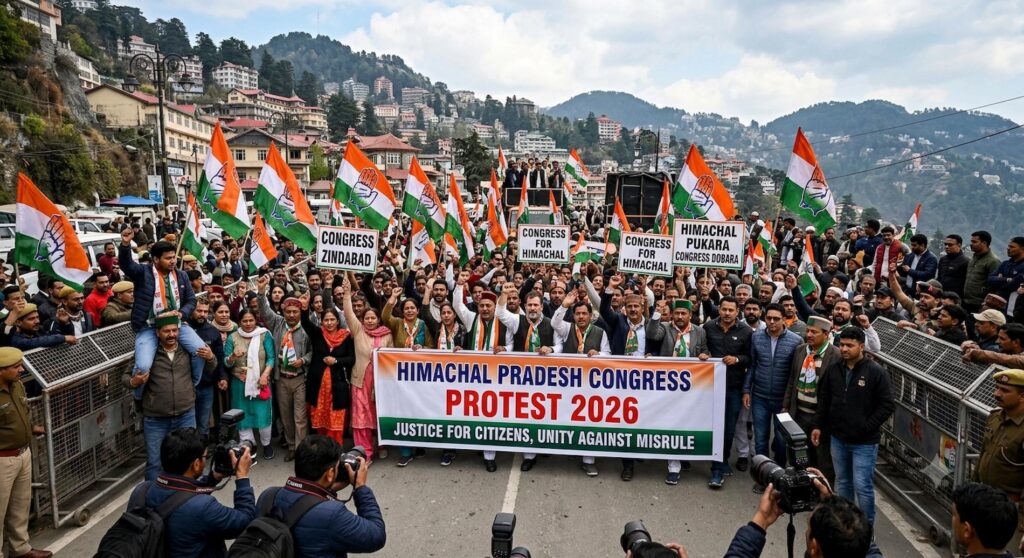
The BJP’s criticism followed a series of protests by Congress leaders in Himachal Pradesh. On September 25, 2026, Congress representatives protested against the functioning of the Election Commission and demanded action against Chief Election Commissioner Gyanesh Kumar.
Those associated with the protest included Rajni Patil, the All India Congress Committee’s Himachal Pradesh in-charge; Vinay Kumar, president of the Himachal Pradesh Congress Committee; Deputy Chief Minister Mukesh Agnihotri; and Education Minister Rohit Thakur.
Congress raised concerns about electoral-roll revision and alleged irregularities in the electoral process. Subsequent reports dated September 28 and 29 described further protests by district Congress committees, with the party using the phrase “vote theft” to frame its objections.
Congress’s concerns form an important part of the story. A balanced report must distinguish between the party’s allegations, the BJP’s rebuttal, and any findings formally established by election authorities or through legal proceedings.
What Congress Says About Electoral Rolls
Congress has questioned aspects of SIR, arguing that the revision process must not result in eligible voters being excluded. Electoral rolls are central to elections because they determine who is registered to vote in a particular constituency.
A revision exercise can involve verifying entries, correcting errors, and updating voter information. Questions about implementation should therefore be assessed using official procedures, published instructions, and relevant records rather than party statements alone.
BJP, meanwhile, has rejected Congress’s interpretation and accused the opposition of undermining confidence in election administration. BJP Himachal Pradesh president Rajeev Bindal also criticized Congress’s campaign against SIR in late September.
Neither party’s characterization should be treated as a substitute for independently verifiable evidence.
Zila Parishad Results Add Another Dimension
The BJP vs Congress Himachal Pradesh dispute also involves elections conducted using ballot papers. Shrikant Sharma referred to the Zila Parishad results to argue that BJP-backed candidates performed strongly even where EVMs were not used.
According to Hindustan Times, BJP said its backed candidates won 136 of 250 District Council wards, compared with 52 for Congress and 43 for independents. Another report cited 229 seats in its tally, so these figures should not be combined without clarifying the different reported totals. For Sharma, the comparison supports the argument that Congress should not blame EVMs alone for electoral setbacks. Nevertheless, differences in local candidates, constituencies, voter preferences, and election conditions mean that results across different elections are not conclusive evidence about the reliability of every voting method.
What Is the Special Intensive Revision?
The Special Intensive Revision is an exercise involving the verification and revision of electoral rolls. The process matters because accurate voter lists are essential to ensuring that eligible citizens can exercise their voting rights.
The dispute has three principal elements:
- Congress’s position: The party has raised concerns about the process, alleged irregularities, and the potential exclusion of eligible voters.
- BJP’s position: The party has rejected Congress’s accusations and argued that the opposition is creating doubts about election administration.
- The election authorities’ role: The Election Commission of India and relevant state authorities are responsible for explaining applicable procedures and addressing complaints within their respective jurisdictions.
Readers following Himachal politics 2026 should distinguish between objections to a policy, allegations of wrongdoing, and findings supported by official records. These are different categories and should not be treated as interchangeable.
Key Political Developments: A Timeline
The following dates explain how the dispute developed:
- May 17, 2026: Municipal corporation polling took place in Mandi, Dharamshala, Solan, and Palampur.
- May 31, 2026: Municipal results showed BJP winning Mandi, Dharamshala, and Solan, while Congress won Palampur.
- June 2026: Zila Parishad results became another point of debate between the parties.
- September 25, 2026: Congress leaders protested in Shimla against the Election Commission and demanded action against Gyanesh Kumar.
- September 28-29, 2026: Further Congress protests focused on electoral rolls and alleged vote theft.
- October 7, 2026: Shrikant Sharma criticized Congress over its EVM-related allegations and objections to SIR.
- October 8, 2026: It published its report on the BJP’s response.
What to Watch in the Coming Weeks
The Himachal election news 2026 debate is likely to remain relevant as parties discuss electoral transparency and future contests. Readers seeking Himachal latest news should look for official statements, published election records, and independently verified reporting rather than relying exclusively on party claims.
Three developments deserve attention:
- Whether Congress provides specific evidence supporting its electoral-process allegations.
- Whether the Election Commission issues relevant clarifications or publishes findings addressing the concerns raised.
- Whether BJP and Congress continue using municipal and district-level election results to support their competing political arguments.
The EVM controversy Himachal debate also highlights a wider issue: public confidence in elections depends on transparent procedures, accessible complaint mechanisms, and evidence-based responses from political parties and election authorities.
For readers tracking political parties in Himachal, the most useful approach is to compare claims with verified figures and clearly identify who made each allegation. The distinction is especially important in politically charged disputes involving the Election Commission of India and Chief Election Commissioner Gyanesh Kumar.
Conclusion
The dispute reflects a deeper disagreement over electoral credibility, political accountability, and public confidence in democratic institutions. The municipal results provide useful context, but they cannot independently settle every allegation about voting procedures or electoral-roll revision. Both parties’ claims should be assessed against verifiable evidence and official findings.