Now Reading: Himachal Panchayat Elections 2026: Election Symbols Will Be Distributed
-
01
Himachal Panchayat Elections 2026: Election Symbols Will Be Distributed
Himachal Panchayat Elections 2026: Election Symbols Will Be Distributed

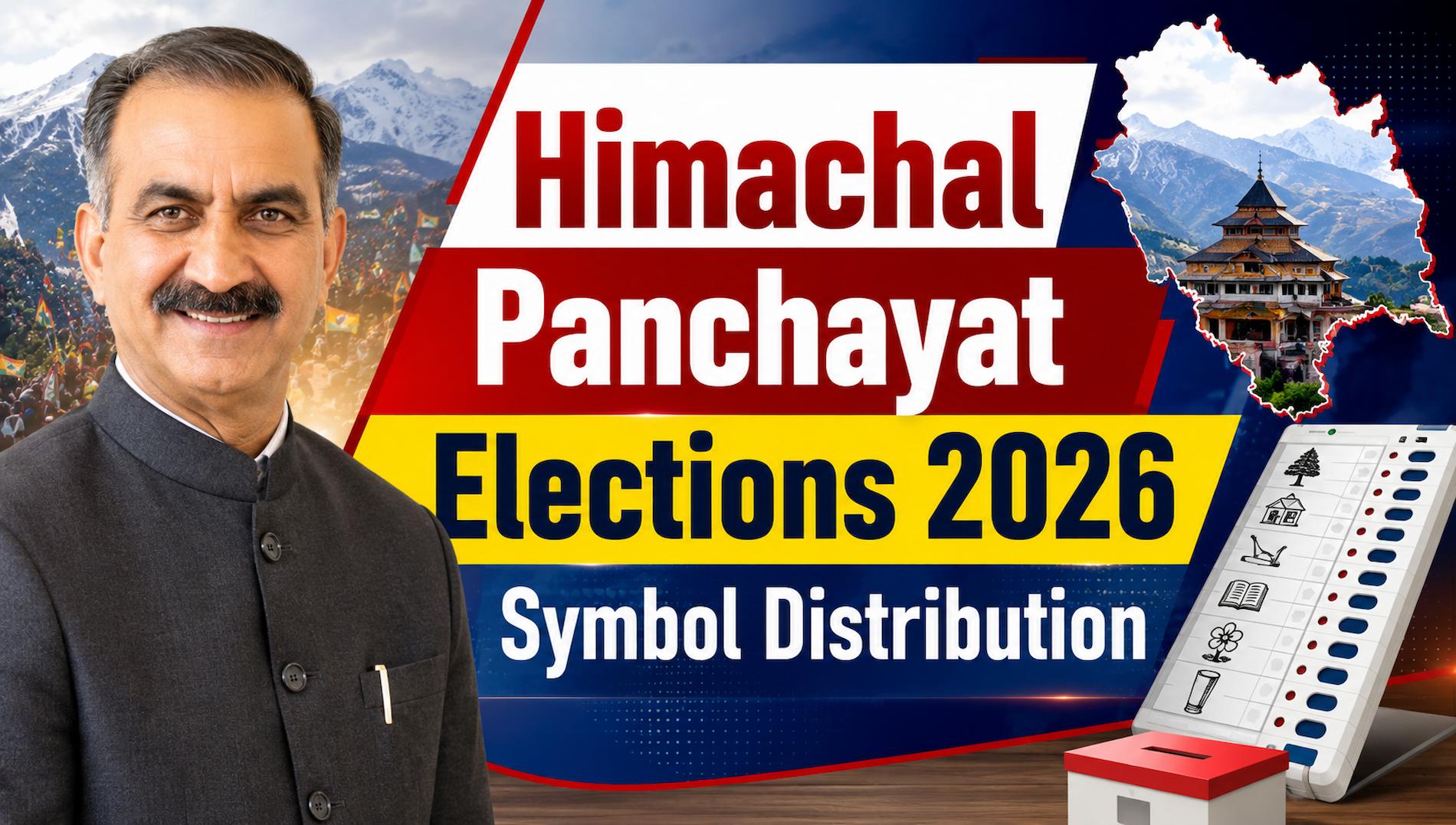
The Himachal Panchayat elections 2026 symbol distribution process begins today, marking a decisive milestone in Himachal Pradesh’s massive rural democratic exercise. Across thousands of villages, finalized symbols will shape candidate identity before three-phase voting starts on May 26, turning visual recognition into a critical factor for over 50 lakh rural voters.
Overview
The Himachal Panchayat elections 2026 symbol distribution day has emerged as a crucial administrative and political event in the state’s expansive Panchayati Raj election cycle. Following nomination scrutiny and withdrawal completion in mid-May, Assistant Returning Officers across Himachal Pradesh’s 12 districts are set to distribute official election symbols today to candidates contesting more than 31,182 posts. Conducted under the Himachal Pradesh State Election Commission led by State Election Commissioner Anil Kumar Khachi, these grassroots elections will unfold in three phases on May 26, May 28, and May 30, with final Panchayat Samiti and Zila Parishad counting on May 31. For rural voters, especially in low-literacy regions, symbols often become the most powerful identifier. This makes today’s allotment process central to campaign visibility, village-level recognition, and political momentum.
Takeaway: Full Election Snapshot
- Election authority: Himachal Pradesh State Election Commission
- State Election Commissioner: Anil Kumar Khachi
- Electoral rolls final publication: April 23, 2026
- Symbol distribution date: 15th May 2026, after scrutiny and withdrawals
- Polling dates: May 26, May 28, May 30, 2026
- Final counting date: May 31, 2026
- Total PRI posts: 31,182
- Coverage: All 12 Himachal districts
- Gram Panchayats: 3,600+ statewide
- Registered voters: Over 50.79 lakh
- Official symbols finalized: 30
- Major parties influencing strategy: Congress and the BJP
Himachal Panchayat Elections 2026 Symbol Distribution: Why Today Matters
The Himachal Panchayat elections 2026 move into a politically sensitive stage as symbols are assigned serially to the final candidates.
This is not a symbolic administrative step alone. It directly shapes voter recall in villages where election symbols often carry greater influence than candidate names.
The State Election Commission has emphasized transparency through Devanagari-script candidate lists, ensuring rural accessibility and clarity.
Panchayat Symbol Distribution Himachal: How the Allotment Process Works
The Panchayat symbol distribution in Himachal, process follows a strict serial allocation system.
Candidates cannot choose preferred symbols. Instead, Assistant Election Officers assign symbols after the final candidate list is confirmed.
Key Administrative Rules
- Symbols allotted serially
- No personal symbol preference
- Category-specific allocation
- Candidate list publication before distribution
- Rural-friendly ballot clarity measures
This system reduces disputes while maintaining electoral neutrality.
Official Election Symbols: Visual Identity in Rural Democracy
A total of 30 symbols have been finalized for the 2026 Panchayati Raj polls.
Common Symbols Include
- Torch (Mashaal)
- Gas Stove
- Truck
- Wall Clock
- Envelope
- Grapes
These symbols differ depending on whether a candidate is contesting for Pradhan, Up-Pradhan, or member-level posts.
Why Symbols Matter in Rural Polling
- Improve voter recall
- Help low-literacy voters identify candidates
- Build campaign branding
- Simplify ballot recognition
- Strengthen village-level outreach
HP Panchayat Election Dates and Three-Phase Voting Strategy
The HP Panchayat election dates have been strategically divided to ensure security, logistics, and smoother administration.
Voting Schedule
- Phase 1: May 26, 2026
- Phase 2: May 28, 2026
- Phase 3: May 30, 2026
Gram Panchayat vote counting will begin immediately after polling at the booth level, while Panchayat Samiti and Zila Parishad counting will conclude on May 31.
Himachal Rural Elections 2026: Massive Scale Across 12 Districts
The Himachal rural elections 2026 are among the state’s largest democratic exercises.
Election Scale
- 31,182 total posts
- 3,600+ Gram Panchayats
- 12 districts
- 50.79 lakh+ voters
This includes elections for:
- Gram Panchayat Pradhan
- Up-Pradhan
- Ward Members
- Panchayat Samiti Members
- Zila Parishad Members
Himachal Panchayati Raj Elections: Political Stakes for Congress and BJP
Though these elections are technically non-party at many grassroots levels, political parties remain deeply involved behind the scenes.
Congress
- Led by Chief Minister Sukhvinder Singh Sukhu
- Faces its first major rural governance test since 2022
BJP
- Led by Jai Ram Thakur’s state influence
- Focused on rebuilding rural organizational strength
These elections may strongly influence future Assembly and Lok Sabha political positioning.
Himachal Election News Today: Local Issues Will Define Outcomes
Current Himachal election news today indicates that local governance concerns may outweigh party identity.
Key Rural Issues
- Road connectivity
- Drinking water
- Agriculture support
- PMAY housing
- Horticulture subsidies
- Employment schemes
Village voters are expected to prioritize practical governance over ideological narratives.
Core Campaign Themes
- Rural roads
- Water access
- Women’s participation
- Employment guarantees
- Panchayat accountability
- Development visibility
Himachal Local Body Polls and Security Framework
The Himachal local body polls are being conducted in multiple phases to ensure law enforcement deployment across mountainous and remote regions.
Special arrangements have also been made for geographically difficult zones to maintain polling access.
This phased structure is particularly important in a hill state where logistics often define electoral success.
Election Commission of India and State Oversight
While the Election Commission of India provides constitutional electoral principles, the Himachal Pradesh State Election Commission is directly overseeing execution under Article 243K and the state Panchayati Raj law.
This ensures local autonomy while maintaining democratic integrity.
Panchayat Elections Himachal: Beyond Local Governance
The Panchayat elections in Himachal represent more than village administration.
They are increasingly viewed as:
- Congress governance referendum
- BJP rural revival test
- Grassroots leadership battle
- Development accountability exercise
Administrative Timeline Before Polling
Following the electoral roll publication on April 23, the process moved quickly through nomination, scrutiny, withdrawal, and now symbol allotment.
Today’s distribution effectively opens the final campaign window before voters head to the booths later this month.
Strategic Importance of Symbol Day
Symbol allotment may appear procedural, but in rural politics, it can determine campaign momentum.
Candidates immediately begin local outreach based on symbol recognition, especially in remote communities.
This makes Symbol Day one of the most practical turning points in the election cycle.
Conclusion
Today’s symbol allotment transforms Himachal’s Panchayati Raj elections from paperwork into a visible grassroots competition. As thousands of candidates receive their electoral identities, the rural contest now enters its most politically active stage, where local trust, governance promises, and village influence will shape democratic outcomes across the state.