Now Reading: Himachal Politics 2026: Congress Protests, Demands CEC Gyanesh’s Resignation
-
01
Himachal Politics 2026: Congress Protests, Demands CEC Gyanesh’s Resignation
Himachal Politics 2026: Congress Protests, Demands CEC Gyanesh’s Resignation

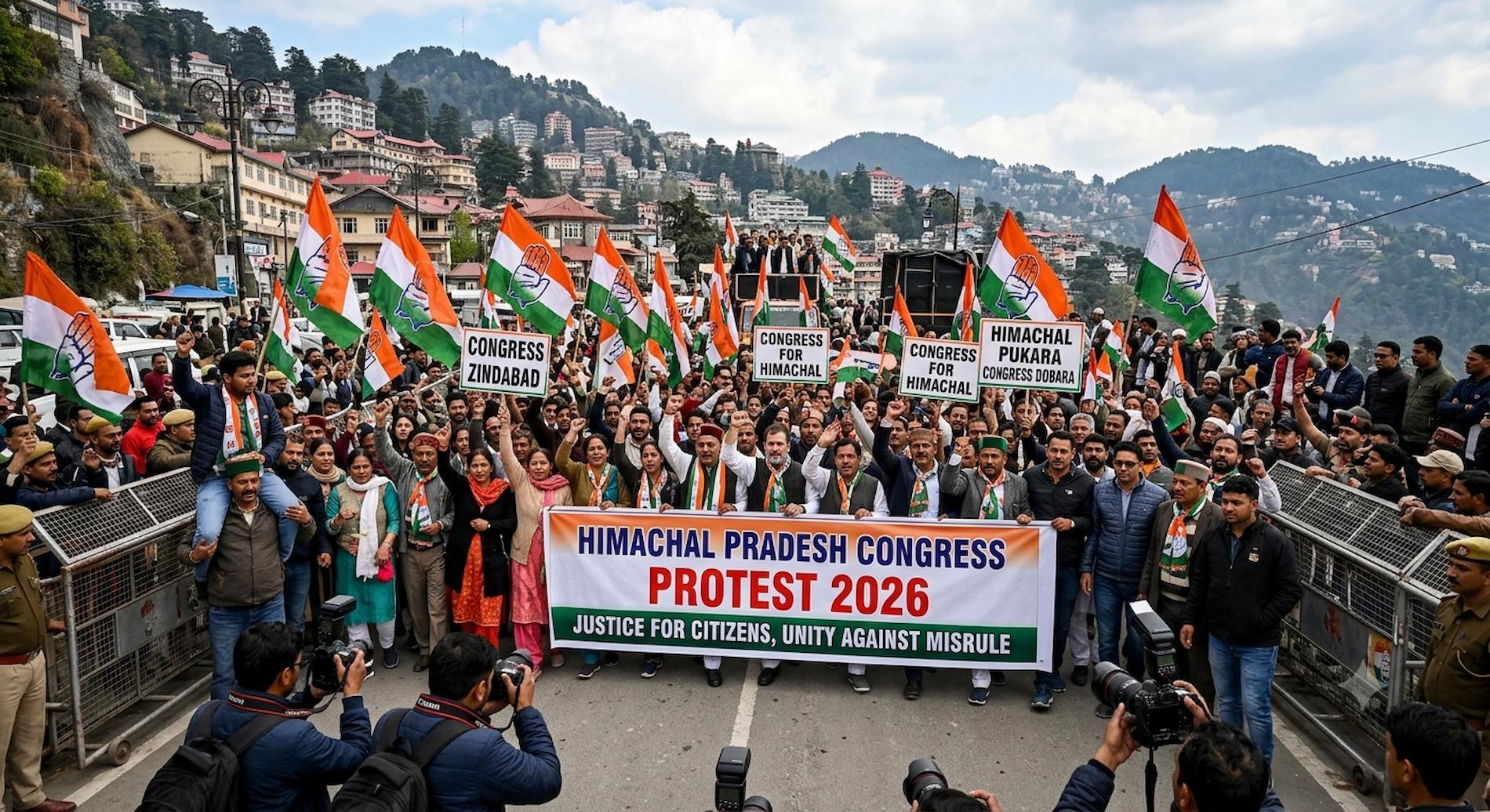
Congress Protests Across Himachal, Targets CEC Gyanesh Kumar
Himachal Pradesh Congress staged protests across all 12 districts on September 28, 2026, demanding the resignation and removal of Chief Election Commissioner Gyanesh Kumar. The agitation centered on the Special Intensive Revision of electoral rolls, alleged voter-list irregularities, and concerns over Election Commission functioning, with district units submitting memoranda to the President through Deputy Commissioners.
The Himachal Pradesh Congress Protest 2026 has brought the state into the wider national political confrontation over electoral-roll revision and the functioning of the Election Commission of India. On September 28, Congress units demonstrated at the headquarters of all 12 districts, submitted memoranda through district administrations, and demanded the resignation or removal of Chief Election Commissioner Gyanesh Kumar.
The immediate backdrop is the Special Intensive Revision, or SIR, of electoral rolls. Congress has alleged that the process could result in eligible voters being removed from electoral rolls and has questioned the transparency of decisions taken by the poll panel. The Election Commission has rejected allegations of manipulation and has maintained that its decisions are taken through its institutional process.
Key Points From the September 28 Protest
- September 28, 2026: Himachal Pradesh Congress organized demonstrations at all 12 district headquarters of the state.
- Main demand: Congress sought the resignation and removal of Chief Election Commissioner Gyanesh Kumar, while several district units also demanded legal action or an FIR.
- SIR dispute: The protests focused on the Special Intensive Revision Himachal electoral-roll exercise and Congress allegations concerning possible deletion of eligible voters.
- Memoranda submitted: Congress district units submitted memoranda addressed to the President of India through the respective Deputy Commissioners. In Shimla, rural and urban Congress units jointly submitted their memorandum.
- Shimla leadership: Vinay Kumar, president of the Himachal Pradesh Congress Committee, has demanded an FIR against the CEC, while Rajani Patil, AICC in-charge for Himachal Pradesh, has also called for his resignation.
- Wider dispute: The state protests form part of a broader opposition campaign involving Congress and other parties over SIR, electoral-roll management, and reported disagreements among Election Commissioners.
Congress Holds Protests Across All 12 Himachal Districts
The scale of the Himachal Pradesh Congress protest 2026 was one of its most notable features. Congress district organizations held demonstrations at all 12 district headquarters on September 28, turning a dispute that had initially centered on the Election Department in Shimla into a statewide political campaign.
The district units also submitted memoranda through the respective Deputy Commissioners. According to the ANI report carried by WebIndia123, the memoranda were addressed to the President of India and raised concerns about the functioning of the Election Commission while seeking action against the CEC.
Shimla Memorandum
In Shimla, the rural and urban Congress units jointly submitted their memorandum. Shimla Rural Congress president Hari Krishna Himral and Shimla Urban unit president Inderjeet Singh were among those associated with the submission.
Congress argued that reported objections from Election Commissioners Sukhbir Singh Sandhu and Vivek Joshi raised questions about the manner in which decisions were being taken within the poll panel. Those claims reflect Congress’s political interpretation of reported internal disagreements and should not be treated as an independent finding of wrongdoing.
Why Congress Is Demanding Gyanesh Kumar’s Resignation
The central issue behind the Himachal Congress SIR protest is the party’s criticism of the Election Commission’s handling of electoral-roll revision.
Congress leaders have alleged that the revision process could affect eligible voters through deletions, verification requirements, and changes associated with voter registration. The party has therefore demanded greater scrutiny of the process and accountability from the CEC.
The Election Commission’s official position differs substantially. The ECI has described SIR as a process intended to ensure that eligible citizens remain included while ineligible entries are excluded. In a March 2026 official communication, the Commission said the objective of SIR was to ensure that no eligible elector was left out and no ineligible person was included.
That difference in positions is central to the political dispute.
SIR and Electoral Rolls at the Center of the Dispute
The Himachal SIR 2026 controversy involves several connected issues.
Voter Verification and Form 6
Congress has raised questions about voter verification, deletion of names, registration of new voters and changes involving Form 6, which is used for new voter registration.
A September 2026 investigation by The Indian Express reported that Election Commissioners Sukhbir Singh Sandhu and Vivek Joshi had formally raised objections on at least 14 occasions between November 2025 and September 2026. The reported disagreements included issues involving electoral-roll access, voter registration, Form 6 and centralized management of electoral data.
These reported objections are separate from Congress’s political allegations. They document internal disagreements reported within the Commission, but they do not by themselves establish that electoral manipulation occurred.
Centralization and Electoral Data
Another issue reported by The Indian Express concerned the management and access of electoral-roll systems. The report said the two Election Commissioners had raised concerns about centralization of voter-data access and the authority of state-level electoral officials.
Congress has incorporated these reported disagreements into its wider Himachal voter list 2026 campaign, arguing that electoral administration requires transparency and safeguards.
What Happened in Shimla, Mandi, Hamirpur and Una
The HPCC protest movement included several district-level demonstrations with different local leaders and demands.
Shimla Demonstration
Before the statewide September 28 action, Congress had already protested outside the Election Department office at Kasumpti in Shimla on September 25. The demonstration was led by state Congress president Vinay Kumar, with Rajani Patil, Chief Minister Sukhvinder Singh Sukhu, Deputy Chief Minister Mukesh Agnihotri and other leaders scheduled to participate.
At the September 25 protest, Congress workers raised slogans against the CEC. Hindustan Times reported that protesters wrote “Chor Aayog” on the signboard outside the Chief Electoral Officer’s office. This was a protest slogan and should be understood as an attributed political expression rather than an established description of the Election Commission.
Mandi Protest
In Mandi, District Congress Committee president Champa Thakur led the demonstration. Congress reiterated its demand for Gyanesh Kumar’s resignation and also sought an FIR.
The district unit submitted a memorandum through the Deputy Commissioner, while raising concerns about reported objections by Election Commissioners Sukhbir Singh Sandhu and Vivek Joshi during electoral-roll deliberations.
Hamirpur and Una
In Hamirpur, the protest was led by Sunil Sharma Bittu, Political Adviser to the Chief Minister. In Una, District Congress president Des Raj Gautam led the demand for action against the CEC.
According to The Tribune, Congress leaders at both locations connected their demands to the SIR controversy and called for a fair investigation.
Kinnaur Protest
Kinnaur saw one of the more prominent protest actions. District Congress president Nigam Bhandari led the demonstration, during which Congress workers reportedly burnt effigies of Gyanesh Kumar, Union Home Minister Amit Shah, and Prime Minister Narendra Modi.
Congress leaders in Kinnaur alleged that the SIR process could undermine voting rights. These allegations were made by the party and remain part of the political dispute rather than established findings.
Congress Raises Questions Over Election Commission Functioning
The Special Intensive Revision Himachal debate has expanded beyond the question of individual voter deletions.
Congress has raised concerns about:
- Alleged deletion of eligible voters from electoral rolls
- Voter verification requirements under SIR
- Registration of new and first-time voters
- Changes connected with Form 6
- Centralized management and access to electoral data
- Reported differences between members of the Election Commission
- Transparency in electoral-roll decision-making
The SIR voter list controversy gained additional political momentum after The Indian Express reported that Sandhu and Joshi had recorded objections on multiple occasions. Its reporting said the disagreements touched the electoral-roll revision process, new-voter registration, software systems and access to electoral data.
Congress leader Rahul Gandhi has also made broader allegations about “vote theft,” which have become part of the national political context surrounding the issue. Those allegations remain disputed by the BJP and the Election Commission.
BJP and ECI Response to Congress Allegations
A balanced account of the Himachal Congress SIR protest requires the response from the other side.
The Election Commission has defended the SIR exercise and rejected allegations that electoral rolls are being manipulated. Its official material describes SIR as an exercise intended to keep eligible electors on the rolls while removing ineligible entries. The ECI also continues to list SIR 2026 resources and electoral-roll services on its official website.
BJP leaders have likewise defended the Commission and criticized opposition parties for what they describe as misinformation surrounding SIR. Recent reporting from The Indian Express said BJP chief ministers and leaders accused Congress and its allies of spreading misconceptions about the electoral process.
The competing positions mean that claims of deliberate electoral manipulation should not be presented as facts without independent evidence.
Wider Opposition Campaign Against CEC Gyanesh Kumar
The Election Commission of India controversy is not confined to Himachal Pradesh. Congress, AAP, TMC, Samajwadi Party and other opposition parties have called for action against Gyanesh Kumar and have raised concerns about SIR and the Commission’s functioning.
The reported disagreements involving Sukhbir Singh Sandhu and Vivek Joshi have further intensified the political debate. The Indian Express reported at least 14 instances of recorded objections over a 10-month period involving issues such as electoral rolls, voter registration and Commission procedures.
For Congress, these reports provide additional context for its demand for an independent examination of the poll panel’s decisions. For the ECI and BJP, the same developments do not establish electoral manipulation, and the Commission has continued to defend its procedures.
Key Facts About Himachal Congress’s September 28 Protest
| Key Fact | Details |
|---|---|
| State | Himachal Pradesh |
| Protest date | September 28, 2026 |
| Districts covered | 12 |
| Main organization | Himachal Pradesh Congress Committee |
| Main demand | Resignation/removal of CEC Gyanesh Kumar |
| Main issue | SIR and electoral-roll revision |
| Memoranda | Submitted through Deputy Commissioners |
| Shimla protest | September 25, 2026 |
| HPCC president | Vinay Kumar |
| AICC Himachal in-charge | Rajani Patil |
| CEC | Gyanesh Kumar |
The September 28 mobilization shows how an electoral administration dispute has become a significant political issue in Himachal Pradesh. The Congress is seeking accountability and legal action based on allegations it has raised, while the Election Commission and BJP reject the characterization that the electoral process has been manipulated.
For readers following Himachal Pradesh politics 2026, the key issues to watch are the handling of SIR, any further decisions by the Election Commission, the reported internal objections within the poll panel, and whether Congress expands its protests at the constituency and grassroots levels.
Conclusion
The September 28 demonstrations marked a statewide escalation of Congress’s campaign over electoral-roll revision and Election Commission functioning. The competing claims now place greater attention on transparency, voter verification, internal institutional procedures, and the mechanisms available for resolving disputes.
Follow the latest developments as the political and legal debate over electoral rolls continues.