Now Reading: BJP Takes Top Shimla Zila Parishad Posts With Independents’ Backing
-
01
BJP Takes Top Shimla Zila Parishad Posts With Independents’ Backing
BJP Takes Top Shimla Zila Parishad Posts With Independents’ Backing

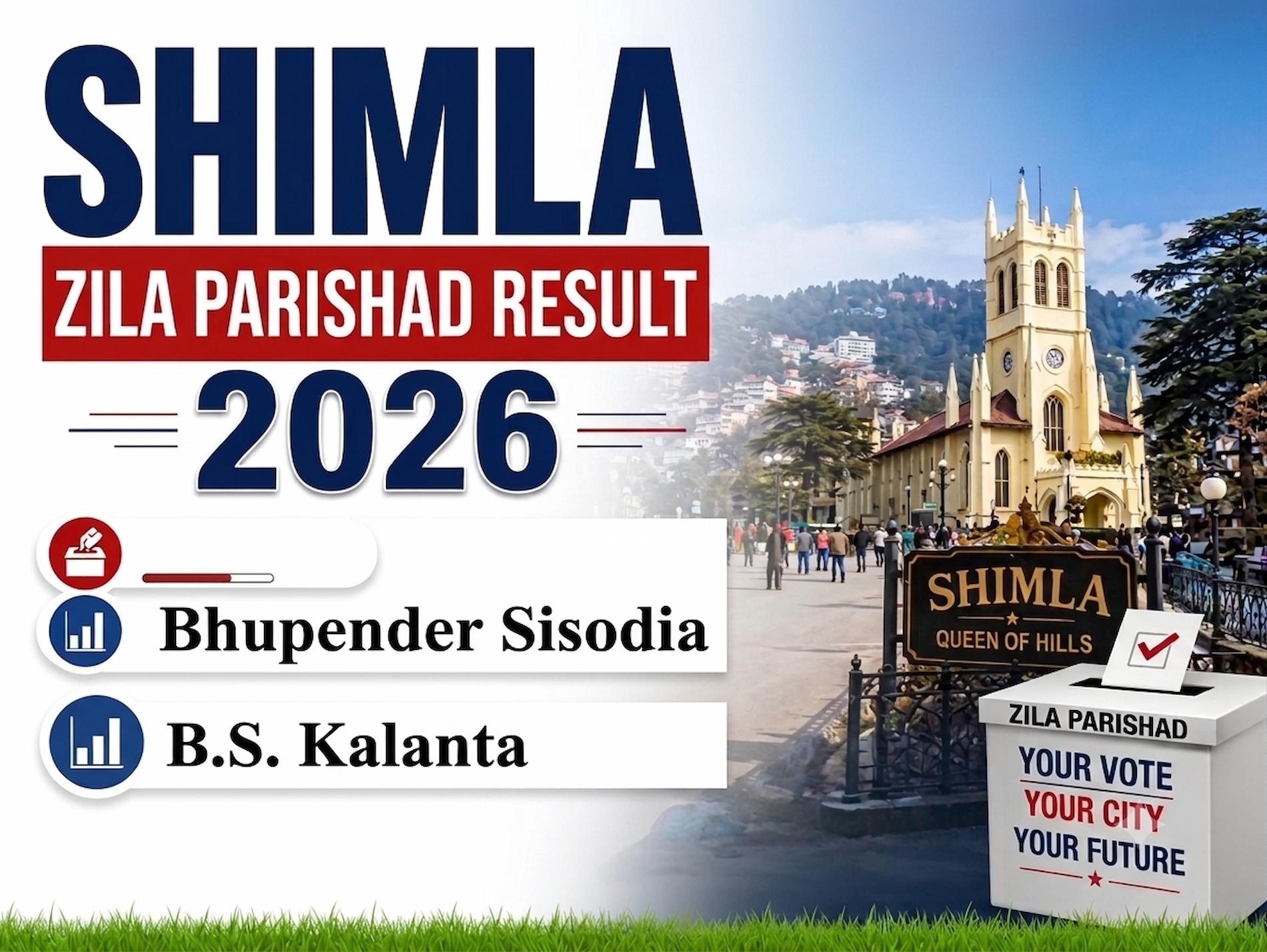
BJP Takes Top Shimla Zila Parishad Posts
Bharatiya Janata Party-backed candidates captured both top Shimla Zila Parishad posts on September 10, 2026, ending a reported 26-year Congress hold. Bhupender Singh Sisodia became chairperson with 13 votes, while Bharat Singh Kalanta won vice-chairperson with 14. Four independent members proved decisive in the 25-member House, turning a divided council into a BJP-backed leadership arrangement after months of procedural and legal delay.
The Shimla Zila Parishad election 2026 has produced a significant change in the leadership of Shimla’s district-level rural local body. On September 10, 2026, BJP-backed candidates secured both the chairperson and vice-chairperson posts, with Bhupender Singh Sisodia elected chairperson and Bharat Singh Kalanta elected vice-chairperson. The result followed more than three months of delay after the local-body election results were declared on May 31.
The outcome is notable because the 25-member House was divided among 11 BJP members, 10 Congress members and four Independents. With 13 votes needed for a simple majority, the Independents had the numbers required to influence which side could control the top posts.
Takeaway: Key Points
- September 10, 2026: BJP-backed candidates won both top posts in the Shimla Zila Parishad.
- 25-member House: The composition was 11 BJP members, 10 Congress members and four Independents.
- Chairperson: Bhupender Singh Sisodia secured 13 votes against Congress-backed Surendra Retka’s 10, with two votes declared invalid.
- Vice-chairperson: Bharat Singh Kalanta received 14 votes against Congress-backed Meenakshi’s 10, with one vote declared invalid.
- Majority mark: Thirteen votes were required, making the four independent members important to the final arithmetic.
- Political context: The result came after a delayed leadership election and ahead of the 2027 Himachal Pradesh Assembly election, although the local result itself does not establish a prediction for the next Assembly contest.
BJP Ends 26-Year Congress Hold in Shimla Zila Parishad
The September 10 contest changed the leadership of a district body that had remained under Congress control for a reported 26 years. The result was a BJP return to control after that period, while it is reported that BJP-backed candidates had taken the top positions for the first time in 26 years.
The development has become a major subject of Shimla political news, particularly because local rural institutions often provide an important organizational base for major Political parties. The BJP Zila Parishad leadership in Shimla will now be headed by Sisodia and Kalanta.
The result does not mean that BJP members alone held a majority. The outcome depended on support beyond the party’s 11 members.
How the 25-Member Zila Parishad Was Divided
The House arithmetic explains why the contest remained close.
Political composition
- BJP: 11 members
- Congress: 10 members
- Independents: 4 members
- Total: 25 members
- Simple majority: 13 votes
The BJP therefore needed at least two votes beyond its 11-member strength to reach the majority threshold. Congress, with 10 members, also needed additional support.
This made the independent members Zila Parishad a central factor in the contest. Reports said the Independents backed the BJP panel, allowing it to cross the 13-vote threshold.
It is important to distinguish support for candidates from formal party membership. Available reporting identifies the four members as Independents; it does not establish that all four formally joined the BJP.
Bhupender Sisodia Wins Chairperson Election
The chairperson election provided the clearest illustration of the closely divided House.
BJP-backed Bhupender Singh Sisodia received 13 votes, while Congress-backed Surendra Retka received 10 votes. Two votes were declared invalid. Sisodia therefore reached the required majority of 13 votes and secured the chairperson’s post.
Chairperson voting figures
| Candidate | Support | Votes |
|---|---|---|
| Bhupender Singh Sisodia | BJP-backed | 13 |
| Surendra Retka | Congress-backed | 10 |
| Invalid votes | Not applicable | 2 |
| Total | 25 |
The result explains the importance of the Independents. The BJP’s 11-member strength by itself was below the 13-vote majority requirement.
For readers searching Shimla Zila Parishad results, Sisodia’s 13-vote total is the decisive number for the chairperson election.
Bharat Singh Kalanta Elected Vice-Chairperson
The vice-chairperson contest produced an even larger vote margin for the BJP-backed side.
Bharat Singh Kalanta received 14 votes, while Congress-backed Meenakshi received 10 votes. One vote was declared invalid. Amar Ujala reported that Kalanta was an independent member who had supported the BJP in the chairperson contest and was subsequently supported for the vice-chairperson position.
Vice-chairperson voting figures
- Bharat Singh Kalanta: 14 votes
- Meenakshi: 10 votes
- Invalid vote: 1
- Total votes: 25
The figures are particularly relevant to the Shimla Zila Parishad election 2026 because they show that the BJP-backed leadership arrangement extended to both principal offices.
Four Independents Hold the Key
The four independent members were central to the final numbers. With 11 BJP members and 10 Congress members, neither major party had 13 votes on its own.
That arithmetic made the independent councillors of Shimla a pivotal group during the leadership contest. Their reported support for the BJP-backed candidates provided the additional votes needed to reach or exceed the majority threshold.
The situation also demonstrates why local elections can produce different leadership outcomes from the initial party-wise seat distribution. The composition of a council and the votes cast during an office-bearer election are related, but they are not identical.
For Shimla district politics, the episode also highlights the influence that Independents can have in a closely divided local body.
Why the Shimla Zila Parishad Election Was Delayed
The leadership election did not take place immediately after the rural local-body results.
Key timeline
| Date | Development |
|---|---|
| May 31, 2026 | Results for the relevant Zila Parishad and Panchayat Samiti contests were scheduled to be counted and declared. |
| June 6 | Elected members were administered the oath after the required quorum was completed. |
| June 27 | A meeting was held, but the chairperson and vice-chairperson election agenda was not specified, according to Amar Ujala. |
| August 3 | A scheduled meeting could not proceed because the required quorum was not met. |
| August 10 | BJP members approached the Himachal Pradesh High Court over the delay. |
| August 11 | The High Court issued directions concerning the delayed process. |
| August 17 | The court proceedings continued as the government submitted its response. |
| September 10 | The chairperson and vice-chairperson elections were finally held. |
The initial Panchayati Raj voting in Himachal Pradesh took place in three phases on May 26, May 28 and May 30, with counting for the Zila Parishad and Panchayat Samiti contests scheduled for May 31.
The delay subsequently became a political and legal issue. BJP leaders criticized the administration, while Chief Minister Sukhvinder Singh Sukhu and Congress leaders offered their own account of the dispute. It is reported that the two sides exchanged allegations over responsibility for the delay.
The High Court proceedings ultimately preceded the September 10 election.
BJP and Congress Responses
The result generated contrasting responses from the two sides.
BJP’s position
Former Himachal Pradesh Chief Minister and Leader of Opposition Jai Ram Thakur welcomed the result and described it as a victory for democracy. He also criticized the state government, alleging that attempts had been made to influence the mandate. These statements represent Thakur’s political interpretation of the events.
BJP leaders present around the election included Rajya Sabha MPs Harsh Mahajan and Sikander Kumar and BJP MLA Balbir Verma. Panchayati Raj Minister Anirudh Singh, who belongs to Congress, was also among the political figures reported to be present.
The Bharatiya Janata Party Shimla organization is likely to use the result as a local political talking point, particularly in discussions surrounding the upcoming Assembly election.
Congress’ position
Congress entered the office-bearer election with 10 members in the Zila Parishad. Its candidates were Surendra Retka for chairperson and Meenakshi for vice-chairperson.
Himachal Pradesh Education Minister Rohit Thakur said the result was disappointing and that the party needed to assess where it had fallen short. He also noted that the contest had been closely matched.
Chief Minister Sukhvinder Singh Sukhu had earlier disputed BJP’s allegations concerning the delay, according to Hindustan Times. The two parties therefore presented different explanations during the dispute over the election schedule.
What the Result Means for Himachal Politics Ahead of 2027
The Shimla local body elections have attracted attention beyond the district because Shimla is politically important in Himachal Pradesh.
Hindustan Times reported that Congress currently holds seven of the eight Assembly seats in Shimla district. Against that background, BJP leaders have presented the Zila Parishad result as evidence of changing local political dynamics ahead of the 2027 Assembly election.
That interpretation should be separated from an established election forecast. A Zila Parishad office-bearer election involves a specific 25-member council, while an Assembly election involves a different electorate, candidates, issues and constituency structure.
The result is nevertheless relevant to Himachal Pradesh politics 2026, particularly because party organizations can use local-body outcomes to assess grassroots support and organizational performance.
The developments will also remain relevant to Himachal Pradesh 2027 elections, but the September 10 result alone cannot determine how voters will act in the Assembly election.
Shimla Zila Parishad Election 2026: Key Numbers at a Glance
- 25: Total elected Zila Parishad members.
- 11: BJP members.
- 10: Congress members.
- 4: Independent members.
- 13: Votes required for a simple majority.
- 13: Votes received by chairperson-elect Bhupender Singh Sisodia.
- 10: Votes received by Congress-backed Surendra Retka.
- 2: Invalid votes in the chairperson election.
- 14: Votes received by vice-chairperson-elect Bharat Singh Kalanta.
- 10: Votes received by Congress-backed Meenakshi.
- 1: Invalid vote in the vice-chairperson election.
- September 10, 2026: Date of the office-bearer elections.
These figures provide a concise snapshot of the Shimla Panchayati Raj elections and explain how the leadership changed despite BJP holding fewer than the 13 seats needed for an outright majority.
FAQs About Shimla Zila Parishad Election 2026
Who became Shimla Zila Parishad chairperson?
Bhupender Singh Sisodia was elected chairperson on September 10, 2026, after receiving 13 votes.
Who became vice-chairperson?
Bharat Singh Kalanta was elected vice-chairperson with 14 votes. Reports identified him as an Independent member who supported the BJP-backed panel.
How many members are in the Shimla Zila Parishad?
There are 25 elected members: 11 BJP, 10 Congress and four Independents.
Why were the Independents important?
Thirteen votes were needed for a simple majority. Since BJP had 11 members and Congress had 10, support from outside their respective groups was necessary to cross the majority threshold.
When were the local-body results declared?
The relevant Zila Parishad results were declared following counting on May 31, 2026, with reporting also noting June 1 for some results.
What is the significance of the result?
The result changes control of the two leading Zila Parishad offices after a reported 26-year Congress hold. BJP leaders have connected the development with broader HP local elections and the political environment ahead of the 2027 Assembly election, while Congress has said it will assess the reasons for the outcome.
Conclusion
The September 10 vote changed the leadership of Shimla’s 25-member district council after a prolonged dispute over the election schedule. Bhupender Singh Sisodia and Bharat Singh Kalanta secured the two top offices, with independent members playing a decisive role in the voting arithmetic. The result has also added a new point of discussion to the political debate in Himachal Pradesh ahead of the next Assembly election.
Stay informed with verified figures, election timelines and developments from Himachal Pradesh local politics.